
Sugars are simple carbohydrates which are classified as monosaccharides namely glucose,fructose, galactose and disaccharides namely sucrose, maltose and lactose. Sugar plays very important role in any cuisine. It provides energy to the body as it is form of carbohydrate.
In this blog, we go through the types, sources, properties, uses and effect of heat on sugar ans its products, Caramelisation and Crystallization mainly.
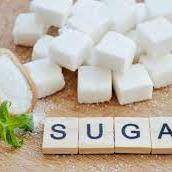
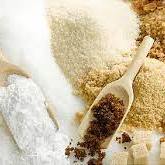
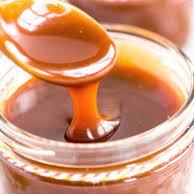

Types of sugar and sources
- Glucose or dextrose – Fruit and plant juices, honey, part of cane and beet sugar
- Fructose or fruits sugar – Fruits, fruits juices
- Galactose – Milk and milk products (Disaccharides)
- Sucrose – Sugar cane, beet root, vegetables like carrots, ripe fruits
- Lactose – Milk and milk products
- Maltose – Wheat, barley, etc.
Properties of sugar and Sugar products
1. Hygroscopic nature — Sugars have the ability to absorb moisture from surroundings atmosphere, this property is called Hygroscopicity.
2. Solubility — Sugars are soluble carbohydrates, which can dissolve in any solute easily.
3. Sweetness index — All sugars differ in their sweetness from each other.
4. Fermentation — Sugar undergoes fermentation in which enzymes from yeast are convert into glucose, fructose, or maltose, and get the by products carbon dioxide and alcohol. It is one of the most important properties of sugar.
5. Hydrolysis reactions — simply means removal of water
- Acid Hydrolysis — Sucrose + Acid = Fructose + Glucose (invert sugar)
- Enzyme Hydrolysis — Sucrose + H2 = Fructose + Glucose (invert sugar)
6. Heat Treatment —
- Dry heat (Caramelisation)
- Wet heat treatment (Crystallization)
Effect of dry heat on sugar (Caramelisation)
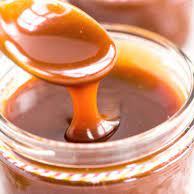
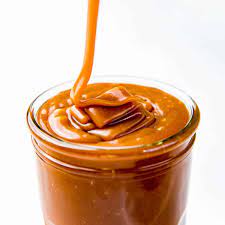
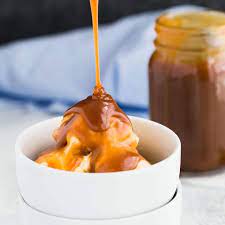
- Caramelisation is the complex process in which when sugar is heated without any water
- Definition of Caramelisation — Dry heat is applied to sugar to its melting point and sugar get decomposed to form dark brown color. This decomposed sugar is known as caramel and process is known as Caramelisation
Characteristics of Caramelisation
- Caramel sugar is brown in color
- It has pungent and strong flavor and slightly bitter taste
- It is less sweet than original sugar
- It is in a crystalline state, which is soluble in water
- On cooling, caramel turns solid and brittle and has transparent shiny appearance
- Temperature of caramelisation depends on type of sugar. Fructose caramelizes at 110°C,sucrose at 170 °C and maltose at 180 °C
- It can be used as a flavoring in puddings and desserts, as filling in ice-cream and toppings in custard.
Uses of Caramel in cookery
- Decoration
- Binding agents
- Flavor and Taste
- Coloring agent
- Variations in texture
- Coating agents
Effect of moist heat on sugar (Crystallization)

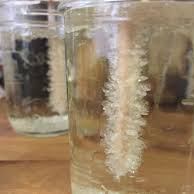
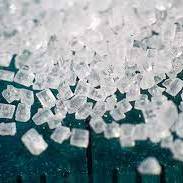
- Definition of Crystallization — When a saturated sugar solution cools down to form a supersaturated solution, the extra solute precipitates in the form of crystals. This process of crystal formation is called Crystallization of sugar
- Solution is made up of solute and solvent ( Sugar + water)
Types of solution:
- Unsaturated solution
- Saturated solution
- Supersaturated solution
Factors affecting crystallization
Temperature of crystallization — at high temperature bigger crystallization form and lower temperature smaller crystal are formed.
Agitation or stirring — Stirring the solution favors the formation of small and more crystals. Agitation also incorporates air and gives a light texture and get smooth products.
Interfering substances — Substances such as glucose, honey, milk, fat, lemon juice, citric acid and enzymes decrease the process of crystallization.
Uses of sugar in cookery

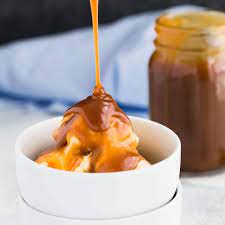
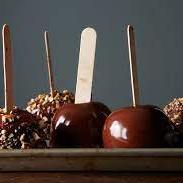
Sweetening agent — Food preparation like tea, coffee, milk shake, kheer, gulabjam and puddings would not be palatable without sugar
Binding agent — In preparation like rawa-besan laddu and vadi, saturated sugar solution is prepared
Coating agent — In preparation like sugar coated groundnuts, balushahi, sugar coated shankarpali, preparations are dipped in concentrated sugar solution. crystals are formed which coat the surface of the products
Decorating agents — Sugar is the one of the important ingredients used for the icing of cakes and pastries
Preservative — In products like jam, jelly and muramba, sugar is added in sufficient amounts to preserve the products
Thank You !
Like, Share, Comment
SUBSCRIBE US NOW !
Email if any suggestion – foodtech101web@gmail.com
+91 91726 81949
+91 97641 19443
Contact Us
Follow US on..
 Food Tech 101
👍
LikeLiked by 1 person
Nice 👍
LikeLiked by 1 person