Various methods of cooking food, its examples, advantages & disadvantages. Also the modes and medium of Heat Transfer.
Method of cooking are classified according to the medium of heat transfer.
- Moist heat methods
- Direct (Boiling, Simmering, Stewing)
- Indirect (Steaming, Pressure cooking)
- Dry heat methods (Roasting, Baking, Grilling)
- Use of fat (Sauteing, Shallow frying, Deep frying)
- Microwave cooking
- Solar cooking
- braising or Combination cooking
1. Moist Heat Methods of cooking
Definition: – The cooking method in which heat is applied to the food with the medium water. There are two main examples of moist heating, Direct & Indirect
1.1. Direct Heat
In this method, food comes directly contact with water.
1.1.A] BOILING

In this method, food stuffs are cooked in boiling water (at about 100°C). The water is enough to completely immersed the food in it. Food may be boiled in any liquid, which is bubbling at the surface (water, milk, juice and syrups). E.g. rice, eggs, legumes, potatoes, meat, etc.
Advantages
- Simplest method of cooking
- Does not require any special skills and equipment
- Food cooked is light and easily digestible
Disadvantages
- Time consuming
- Loss of water soluble nutrients, color and flavors
1.1.B] SIMMERING
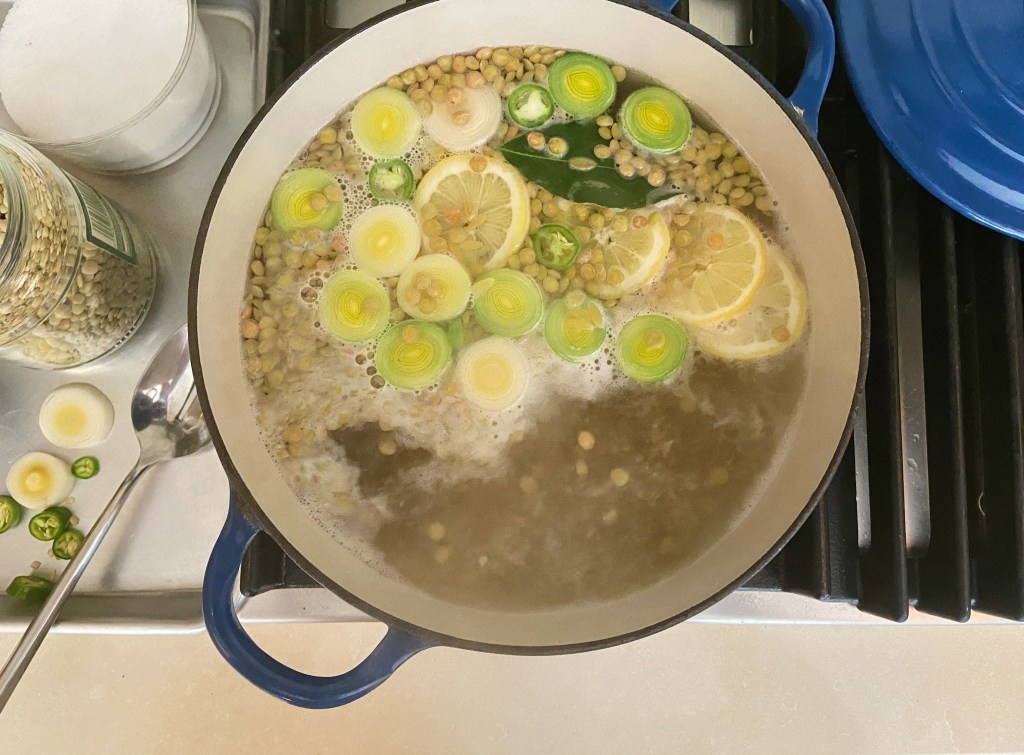
Simmering is a food preparation method in which food are cooked in hot liquid kept just below the boiling point of water at 85-90°C. It is a useful method when food have to be cooked for a long time to make it tender E.g. cuts of meat, fish cooking, custards, curries, soups etc.
Advantages
- Uniform cooking takes place
- Due to low temperature loss of nutrients are less
- Useful for foods which curled by boiling temperature E.g kadhi, kheer.
Disadvantages
- Loss of water soluble nutrients, color and flavors
- Require more time to cook
1.1.C] STEWING

This is slow method of cooking, in which the food is cooked in a closed pan using only a small quantity of liquid. Temperature is 85-90° C. The water should be enough and temperature should be low. The foods which are generally stewed are fruits, vegetables, meat, etc.
Advantages
- A minimum nutrients loss is observed due to low temperature
- The flavor is retain
Disadvantages
- Very slow method of cooking, requires constant attention
- A significant amount of vitamin C is destroyed
1.2. Indirect Heat
In this method , food does not come in indirect contact with water.
1.2.A] STEAMING

Food is cooked with the heat generated by steam and therefore it requires slightly longer time. Steaming is carried out in two ways as following
Direct steaming: Food comes in direct contact with the steam. E.g– steaming of cut vegetables or sprouted, fish, idli, dhokla etc.
Indirect steaming: Foods does not come in direct contact with the steam. The process takes a slightly longer time. E.g. melting of chocolate in double boiler.
Advantages
- Food cannot be easily overheated, does not require constant attention
- Food cooked by this method is easy to digest
- It requires less time, thus it saves fuel and money
Disadvantages
- Cannot be used for all the foodstuffs
- Special equipment is required
1.2.B] PRESSURE COOKING

The equipment used for this purpose is a pressure cooker. The cooker works by tapping the steam produced from boiling the cooking liquid inside the vessel. This leads to increase in internal pressure and temperature quickly. All types of cereals, pulses, vegetables and meat can be cooked in a pressure cooker.
Advantages
- Time required for cooking is less
- Retention of nutrients is maximum
- This is economical method of cooking
- By using separate container, more than one type of food can be cooked at one time in one vessel
Disadvantages
- Special equipment is required
- Food can be mushy if cooked for longer time period
2. Dry Heat Methods of cooking
In dry-heat method of cooking, air is the medium of heat transfer. Food cooked using this method have a rich flavors due to caramelization and browning.
2.A] ROASTING

This method involves cooking of the food in open fire i.e. dry heat. This can be done in outdoor, in an oven or in a thick heavy pan, E.g. chicken is roasted with occasional addition of little fat. Some foodstuffs can also be roasted in a suitable medium like sand or salt which get heated faster and can retain the heat. They immediately puff up and are ready to eat. E.g- Popcorn
Advantages
- Food develop good color and flavors
- Becomes easy to digest
- Nutrients losses are less
- It reduce the moisture content of the food, improve keeping quality and flavor. E.g- groundnut etc.
Disadvantages
- The foodstuffs being roasted requires constant attention otherwise food may get burned.
2.B] BAKING
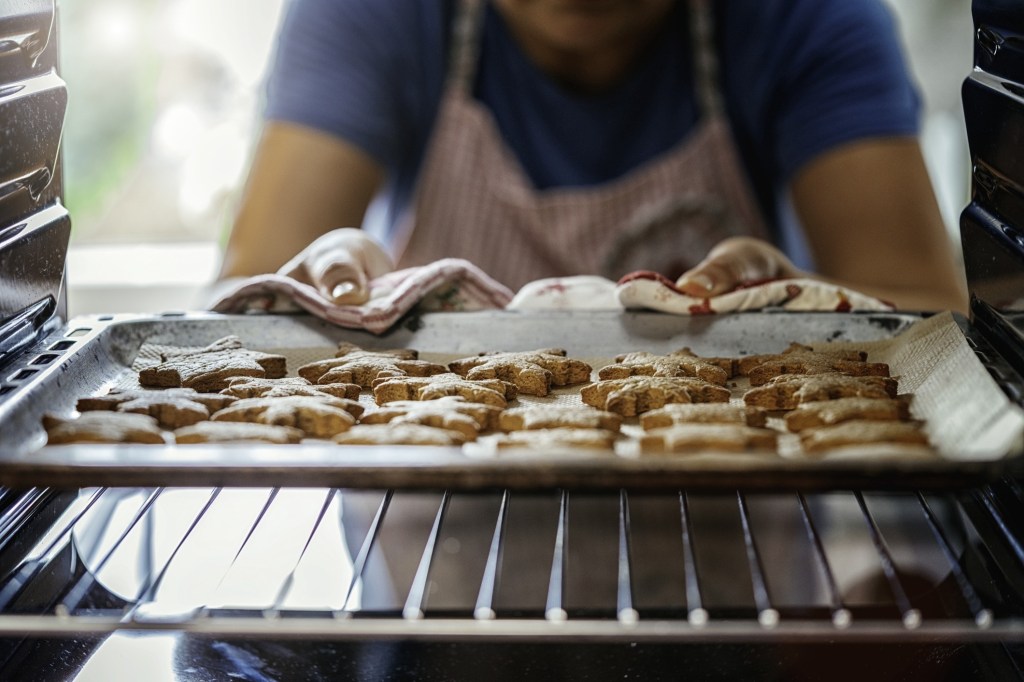
Baking is the cooking of food with hot air in a closed compartment know as oven. A uniform temperature of 160° to 220°C is maintained. Usually oven is heated to a particular temperature and maintained throughout the cooking time. E.g. cake, biscuits, pies, breads etc.
Advantages
- Food develop a good color, flavor and texture
- Uniform bulk cooking can be done
- Less loss of nutrients
Disadvantages
- Specific equipment I.e. an oven is required.
- It is a slow method of cooking
2.C] GRILLING

This method includes the application of dry heat to the surface of food on grilling bars commonly from above or below so that it gets cooked by radiant heat like in grilling sandwich or grilling chicken. This method is generally used for surface browning. Temperature range is 163° to 177°C.
Advantages
- Quick method of cooking, suitable for snacks and time saving meals
- Food is a crispy, brown, tasty and more attractive
- Less loss of nutrients
- Healthy method of cooking as it requires less or not fat
Disadvantages
- Special grilling equipment is required, requires carefully attention to prevent overcooking.
3. Use of Fats for cooking
In this method fat or oil is the medium of heat transfer. Fat or oil can be heated to a much higher temperature as compared to water. Fried food are very tasty, crispy, crunchy and popular in our meals. Different methods of frying used as follows
3.A] SAUTEING

In this method a small quantity of fat is used which is just enough to be absorbed by the food. It is usually done as pre-preparation step in many dishes.
E.g. Sauteing of vegetables for preparation of noodles, fried rice, etc.
3.B] SHALLOW FRYING

In this method sufficient amount of fat is used in pan or raw, but not enough to cover (dip) the food completely. Usually this foods like Paratha , Omelet etc. are cooked by this method where food is turned on both the side equally for uniform cooking.
3.C] DEEP FRYING

Enough oil or ghee is used to completely cover the food , then it is cooked uniformly on all the side. This method is faster than boiling at temperature of 180 to 220°C. This high temperature results in immediately removal of moisture and hardening of the outer surface, preventing any loss of flavors and juices. E.g. samosa , goolabjamun, etc. This food become more spongy and crispy. It attain golden brown attractive crust color and pleasant flavor.
Advantages
- Quick method of cooking
- Food become very appetizing and tasty
- Better keeping quality because of low moisture
- Introduce variety in meals as fried food are crispy in texture
Disadvantages
- Difficult in digest due to high fat or oil content
- Increases the calorific value of the food products
- Nutrient loss due to high temperature (mainly Fat Soluble nutrients)
- It is not an economical method of cooking
- More attention are care should be taken during frying
- Repeated use of heated oil may produce harmful substances
4. Microwave Cooking of food

With changing food patterns, the popularity of microwave oven is increasing because it is convenient and fast method of
cooking. Heat is transferred by Radiation mode.
Science Behind – Microwave oven is an electronic oven containing an instrument called the Magnetron tube. This tube converts electric current into high frequency microwaves (electromagnetic energy radiations). These are absorbed and penetrated in the food. These waves cause vibration of food
molecules resulting in friction. Due to friction, heat is generated within the food and it results in cooking of food. There is no medium of heat transfer.
Utensils – Microwave heating of food require to use paper, bone china, glass, some plastics and special microwavable containers.
Advantages
- Time saving and convenient method
- Less loss of nutrients
- The food gets cooked uniformly
- It is useful for defrosting frozen foods or heating cold foods
- Oil consumption is very less in microwave
- Economical method because electricity consumption is less
Disadvantages
- Not suitable for bulk cooking as the time taken for cooking is directly proportional to the amount of food
- Special containers made of paper, glass, plastic, etc. have to be used in microwave oven, no metal containers
5. Solar Cooking Method

For solar cooking, an appliance called
solar cooker is required.
Definition – A solar cooker is a device which uses the energy of direct sunlight to heat, cook or pasteurize food materials. It is a box like structure, the lid of which holds mirror. The containers in which food is kept are placed in the chamber of box, which is covered by glass.
Science Behind – When solar cooker is placed in the sunlight, solar energy from the sun heats it, by radiation. The sun rays containing solar energy fall on the mirror, get reflected by it to the glass cover and pass through the glass to the inner chamber where food is kept. The inner walls of chamber and food container are coated with black color, so that the heat is absorbed and retained to the maximum.
Advantages
- Economical method (gas, kerosene,coal are not required)
- Constant attention is not required
- Food remains hot for longer period when kept in this cooker
- Eco-friendly method
Disadvantages
- Slow at low temperature and takes 2-4 hours depending on the intensity of sunlight available
- The method is weather dependent (best to use in sunny days)
6. Braising (Combination Cooking)
Definition- The cooking method in which tow or more different cooking methods are combined also with different modes & mediums of heat transfer, this is usually referred as Braising.
E.g. vegetable curry (sauteing and simmering), upma (roasting and boiling), meat cutlet (boiling and deep fat frying), matar paneer (frying and stewing), etc.
Advantages
- The food is very tasty and full of flavor, even most of the nutrients are retained
- Excellent sensory quality properties (color, flavor, taste, texture and appearance)
Disadvantages
- It is a time consuming method and requires constant attention.
Thank You. Do comment on blog
Like, Share and Subscribe us
Follow us on
 Food Tech 101
Very good
LikeLiked by 1 person
Very informative 👍👍👍 thnx for sharing 😊 keep it up 👍👍
LikeLiked by 1 person