Fish is found abundantly in all natural waters. It is a valuable source of food and has been used by man from antiquity. About 10 % of the world’s fish catch comes from inland fisheries. The total fish catch of the world is of the order of 90 million tonnes per year. The consumption of fish in India is about 7.7 kg per capita per year, which is perhaps the lowest in the world.
Seafood definition : Seafood is any form of sea life regarded as food by humans, including fish and shellfish.
Fish is a food of excellent nutritional value, providing high quality protein and a wide variety of vitamins and minerals. Commonly consumed varieties of fish are salmon, sardine, mackerel, tuna, catfish, brown duck, ribbon fish, prawns, pomfret, rohu, trout, tilapia, etc.
Types of sea foods : carp, caviar or sturgeon roe, cod ,crab, crayfish, eel, fillets of snapper, lobster
Classification of Fish
What are the two major classes of fish ?
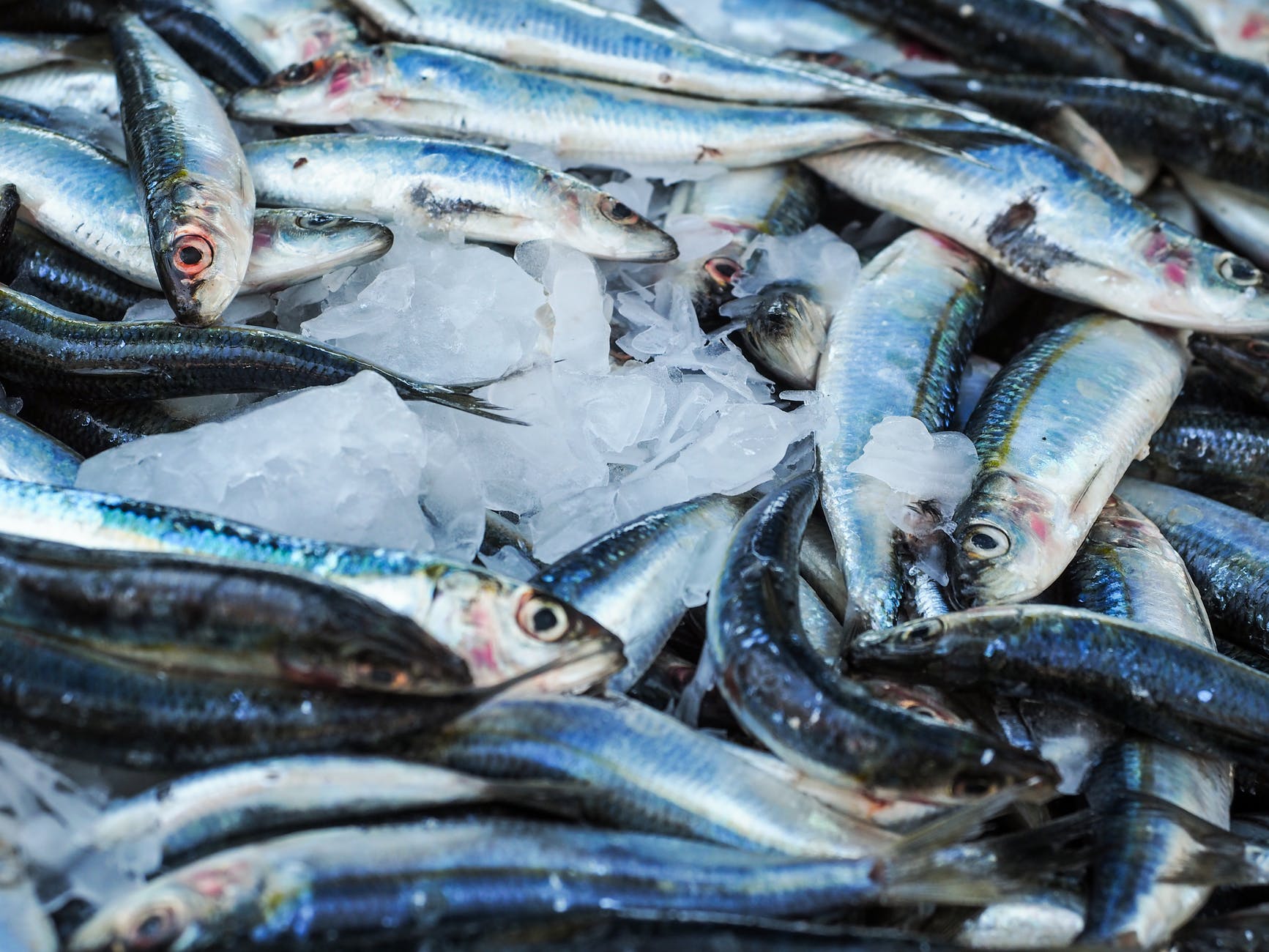
1. Fin Fish
- The fin fishes have bony skeleton.
- Fin fishes – ( Fresh Water – Sardine, Mullet, Catfish; Salt Water- Shark, Salmon, Mackerel, Tuna)
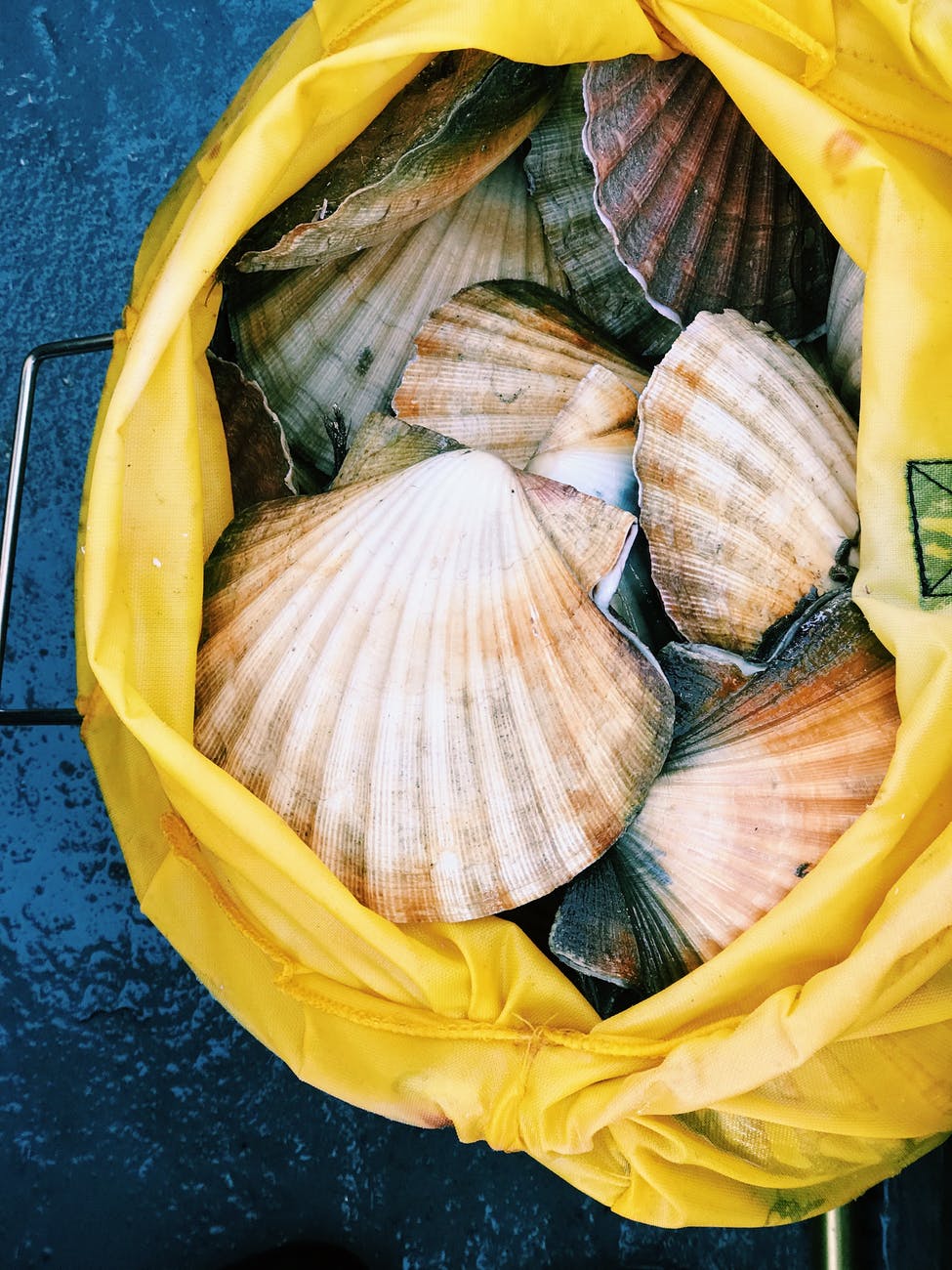
2. Shellfish
- fishes without a skeleton but covered with some type of hard shell are shellfishes.
- Shellfish – ( Mollusks-Oysters, Clamps, Scallops, Mussels; Crustaceans-Lobster, shrimps, crabs, prawns)
Types of Shellfish
- Shrimp
- Oysters & Clams
- Crabs & Lobsters
Classification of fish based on fat content
- Lean fishes(< 2% fat)
- Medium fishes(2-5% fat)
- Fat fishes (> 5% fat)
Characteristics of shellfish
- The shellfish includes two highly diversified phylum Arthropoda and phylum Mollusca.
- These two groups are named as shellfishes because of the presence of exoskeleton made of chitin in arthropods and shells made of calcium in molluscs.
- These two major phyla are invertebrates.
Composition of Fish
- Protein — Fish is an excellent source of protein is about 20 %
- Fat — The fat content of fish varies from 0.1- 25 %
- Minerals — It is a good source of copper, sulphur, phosphorus, magnesium & selenium
- Vitamins — Fish oils are rich source of vitamin A and D
- Water — It ranges from 70 to 80%
Fish Spoilage, Processing & Preservation
Fish Spoilage
Microbiological Spoilage
Flesh of healthy live fish is bacteriologically sterile.
spoilage takes place shortly after the death of the fish when bacteria attack all the constituents of the tissues.
Physiological Spoilage
Fish has gone into rigor and passed out of it. For rigor mortis to set in, the glycogen in fish muscle must be converted into lactic acid accompanied by a decrease in pH.
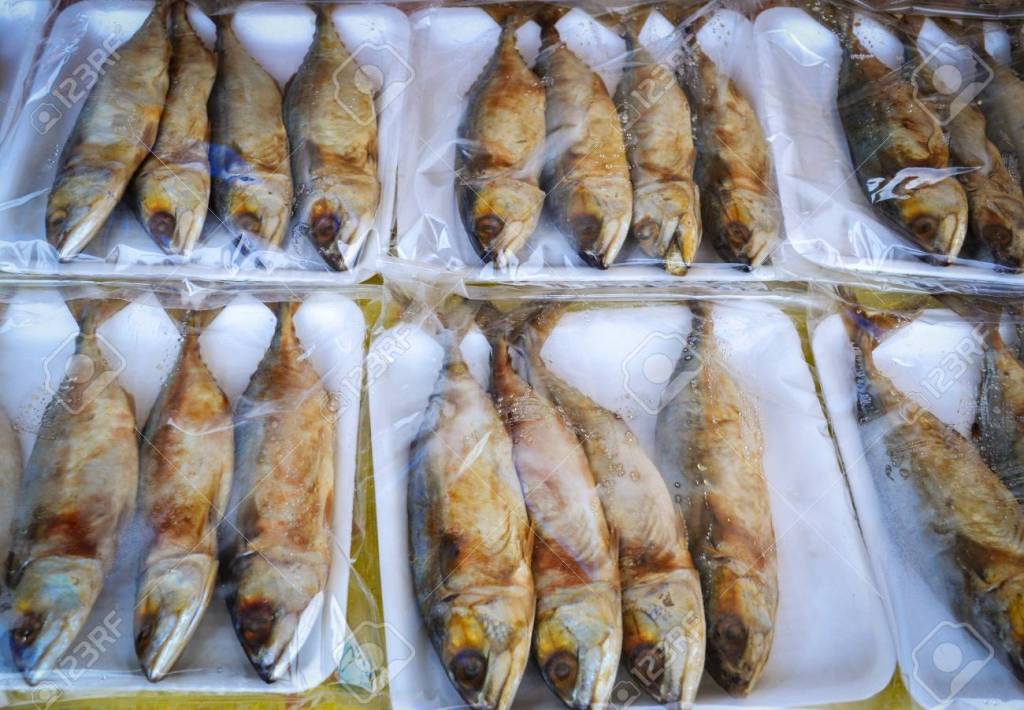
Chemical spoilage
All fish products have a fishy odour due to deterioration. The fishy odour is due to the production of trimethyl amine by the action of bacteria on phospholipids and choline present in fish.
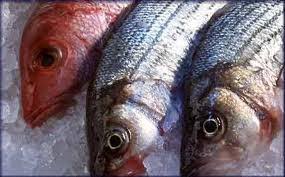
Fish Processing & Preservation methods
what are the general six methods of fish preservation? Fish Processing is a way of preserving fish and at the same time improving their shelf life and quality. There are various preservation methods process fish
Salting
Salt partially dehydrates the fish and kills the bacteria (by osmotic effect). Salting serves to impart flavor and color to fish and has a profound effect on texture.
Smoking
It partially dehydrates the fish. The smoke gives color and flavor to the fish due to its chemical compound. Different smoking ovens are used.
Drying (Dehydration)
The most popular fish preservation method is sun drying that is done in combination with salting.
Curing
method involves chemical preservatives (including vinegar and salt), smoke, and other physical factors to reduce the moisture content of the fish.
Canning
the packing of fish in an airtight containers such as tin cans and glass jars, which prevent air and microorganisms from entering.
Fermentation
It is a fish preservation method in which fish is kept in brine solution which undergoes fermentation reaction forming acetic acid and lactic acid.
Combination of these methods with freezing & chilling helps to preserve fish for a longer time. Irradiation method is used in some countries but not so effectively considered.
Fish Cookery
- Fish is generally cooked by dry heat, such as broiling, baking and frying & Moist heat methods, such as steaming and poaching.
- Whole fish fillets and steaks may be baked.
- Broiling may also be used to cook whole fish or fish cuts.
- Frying is one of the most popular methods of cooking fish. The fish may be shallow or deep fried.
- Cooking fish by steaming and poaching helps preserve its delicate flavour.
Effect of cooking on fish
- Fish is cooked mainly by dry heat methods as it cooks very fast.
- Moist heat methods are used mainly for variety of food preparations.
Seafood Health Benefits
Fish is filled with omega-3 fatty acids and vitamins such as D & B2 (riboflavin). Fish is rich in calcium and phosphorus and a great source of minerals, such as iron, zinc, iodine, magnesium, and potassium. The American Heart Association recommends eating fish at least two times per week as part of a healthy diet.
Fish Products
A number of products are prepared from fish These include
- fish meal used as animal feed.
- fish flour used for protein enrichment of human food.
- fish oils used for feeding and industrial purposes, fish glue, a high grade fish collagen used for the clarification of wines, beer, vinegar, etc.
- Fish paste
- Fish sauce
- Fish protein concentrate
- Fish hydrolysate
Seafood products in India
Frozen shrimps, cuttle fish, squid, octopus and fish items such as Reef cod, Ribbon fish, Croaker, eel, sole, white snapper, stingray, Yellow fin Tuna, tuna etc.
Thank You !
SUBSCRIBE US NOW..Inspire your inbox
Email – foodtech101@gmail.com
+91 91726 81949
+91 97641 19443
Contact Us
Follow Us on…
 Food Tech 101