Poultry
The term “poultry” refers to domestic fowl reared for their flesh, eggs or feathers & includes chickens, ducks, geese, turkeys, guineas, and pigeons. Of these, chicken and turkey are most commonly used for their meat.
Definition of Poultry — The poultry mean is applied to all domesticated birds used as food and it includes chicken, duck, geese, turkey and pigeon.
The poultry birds kept for eggs are called as ‘layers’ and the meat birds are ‘broilers’
4 common types of poultry
What are the four types of poultry? How many percent of protein does poultry has?
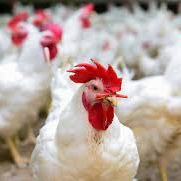

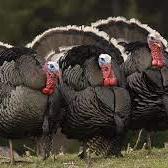
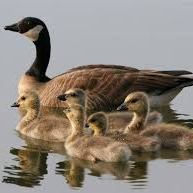
1.Chickens 2. Ducks 3.Geese 4.Turkeys
Classification of Poultry
Broiler or Fryer
Chicken of 8 to 10 weeks of age of either sex, tender-meated with soft, pliable, smooth-textured skin and flexible breastbone cartilage.
Rooster
A young chicken, usually 3 to 5 months of age, of either sex, tender-meated with soft, pliable, smooth-textured skin and breastbone cartilage that may be somewhat less flexible than that of the broiler or fryer.
Stag
A male chicken cock, usually under 10 months of age, with coarse skin, somewhat toughened, with darkened flesh, and a considerable hardening of the breastbone cartilage.
Stewing chicken or fowl
A mature chicken, usually more than 10 months of age, with meat less tender than that of a roaster and nonflexible breastbone tip.
Cock
A mature male chicken, usually over 10 months of age, with coarse skin, toughened and darkened meat, and hardened breastbone tip.
Zoological Classification of Poultry
- Kingdom : Animalia
- Phylum : Chordata (with back bone)
- Sub-Phylum : Vertebrata (with spinal column)
- Class : Aves (Feathered, warm blooded, 4 chambered heart)
- Subclass : Neornithes (without teeth)
Poultry Processing
What is processed poultry? What are some poultry preparation techniques? What are the steps in poultry processing? What is the best cooking temperature for poultry?
- Birds are generally not fed for 12 hours before slaughter to ensure that their crops are empty, which helps cleaner operations.
- After that stunning is carried out by electrical stunners.
- Bleeding takes 1 to 3 min
- After bleeding the birds are scalded, i.e, dipped in hot water briefly. ( At 60°C and the bird is kept in it for about 45 sec ) then outer layer of the skin (cuticle) being removed, at 52°C for 2 min.
- Then the feathers are removed, generally by mechanical methods.
- After de-feathering, evisceration of the bird takes place.
- The head, feet and oil glands are then removed from the drawn bird.
- The eviscerated birds are thoroughly washed and chilled ( At 1.7°C Rapid chilling )
Cooking of Poultry
- Poultry is cooked by dry heat as well as moist heat methods
- Effects of cooking poultry improve the sensory qualities, palatability and digestibility.
- Broiling and Frying
- Roasting (dry heat)
- Tandoor Chicken (most famous)
- Braising and Stewing
EGG
India is the largest egg producer in the world. The annual egg production has been reported to about 75 billion.
Egg definition — An ovel or rounded body surrounded by a shell or membrane by which some birds & fish reproduce and from which the young hatches out.
Structure of Egg
A fully developed egg has a shell, two membranes, albumin or white of the egg, yolk or yellow of the eggs.
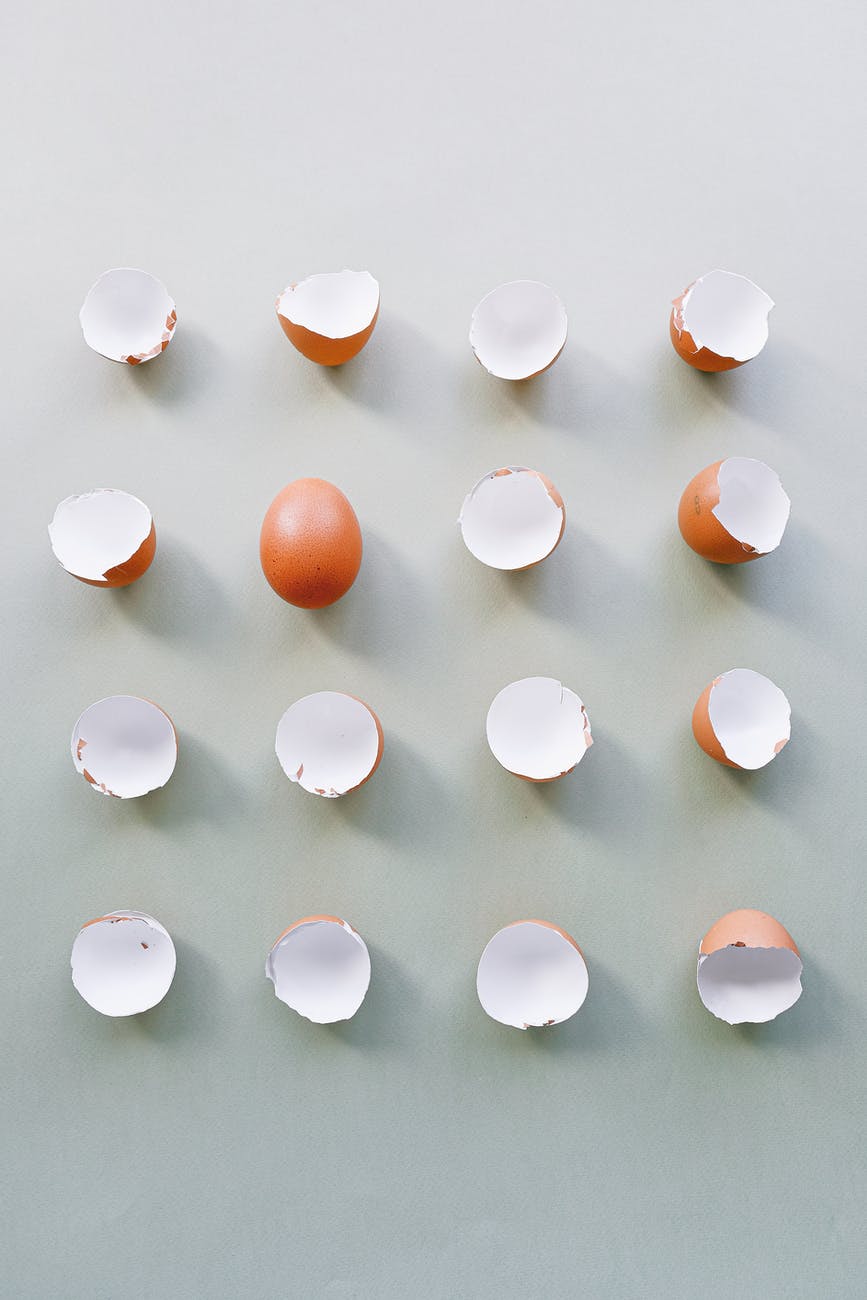
Shell
- The shell is the natural protective outer covering of the internal contents of egg.
- It is made up of insoluble salts of calcium (calcium carbonate) and magnesium.
- It restricts the entry of micro organisms into the egg and thus protects the inner contents from various infections.
Lining membrane
- Within the shell there are inner and outer membranes that form the lining membrane.
- It protects the quality of egg.
Egg white
- Outermost layer of thin egg white.
- A layer of thick egg white.
- Innermost layer of thin egg white which lies adjacent to the yolk.
Egg yolk
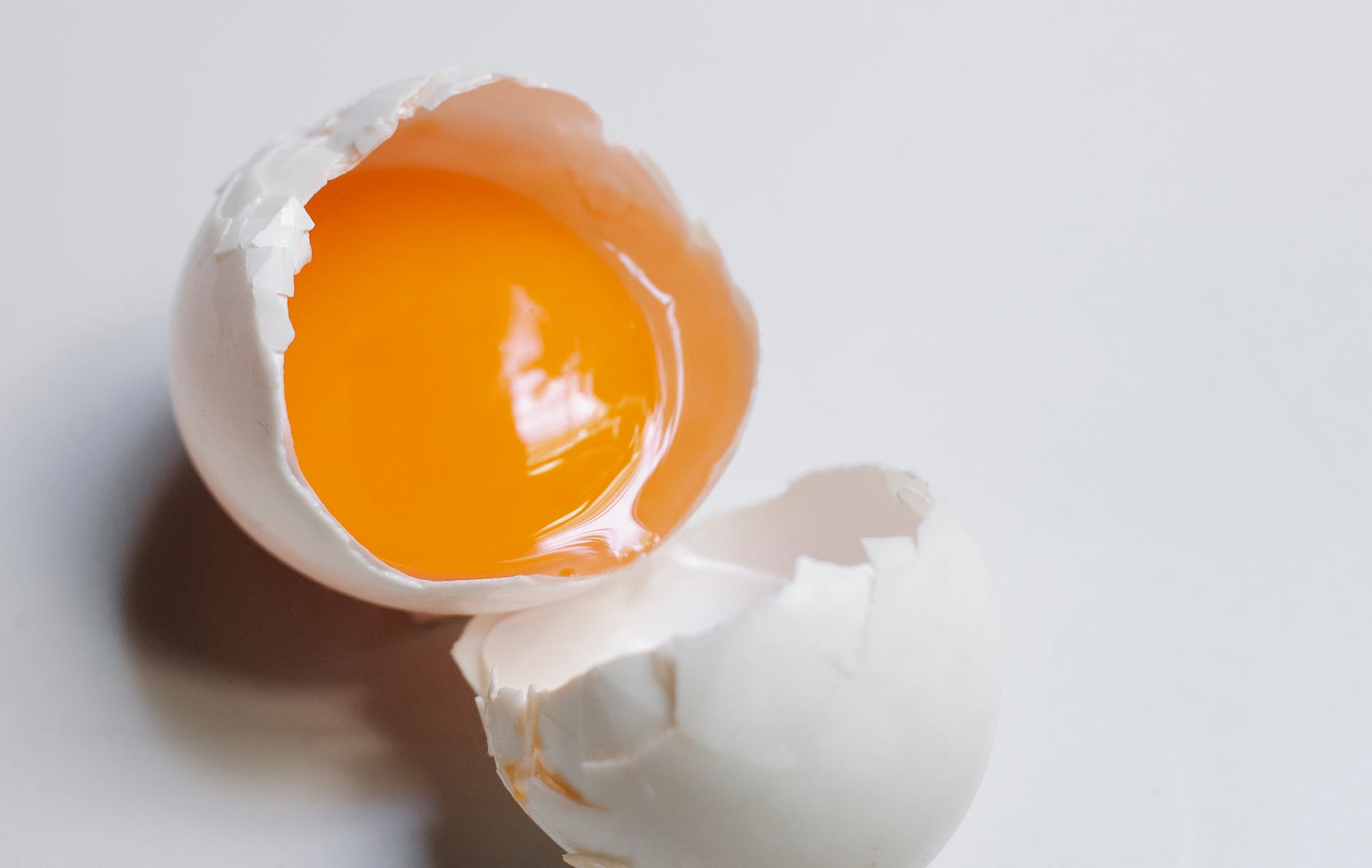
- It is the central part of an egg.
- It is usually yellow in colour but the colour varies from dark yellow to orange.
- The yellow colour of the yolk is due to the colour pigment called xanthophyll.
Composition of Egg
Eggs have an excellent nutritive value
- Protein : Egg contains about 12 to 14% protein.
- Fat : Egg contains approximately 10 to 12 % fat.
- Minerals : The whole egg contains about 1% minerals. Calcium, phosphorus, sulphur are present.
- Vitamins : Egg yolk is an excellent source of Vitamin A & good source of thiamine and riboflavin.
- Water : Egg contains approximately 74 % water.
Egg benefits
- Eggs Are Nutrient Rich.
- Eggs Contain The Highest-Quality Protein.
- Eggs Improve Levels of “Good” Cholesterol.
- Eggs Provide A Great Source Of Vitamin D.
Egg Products
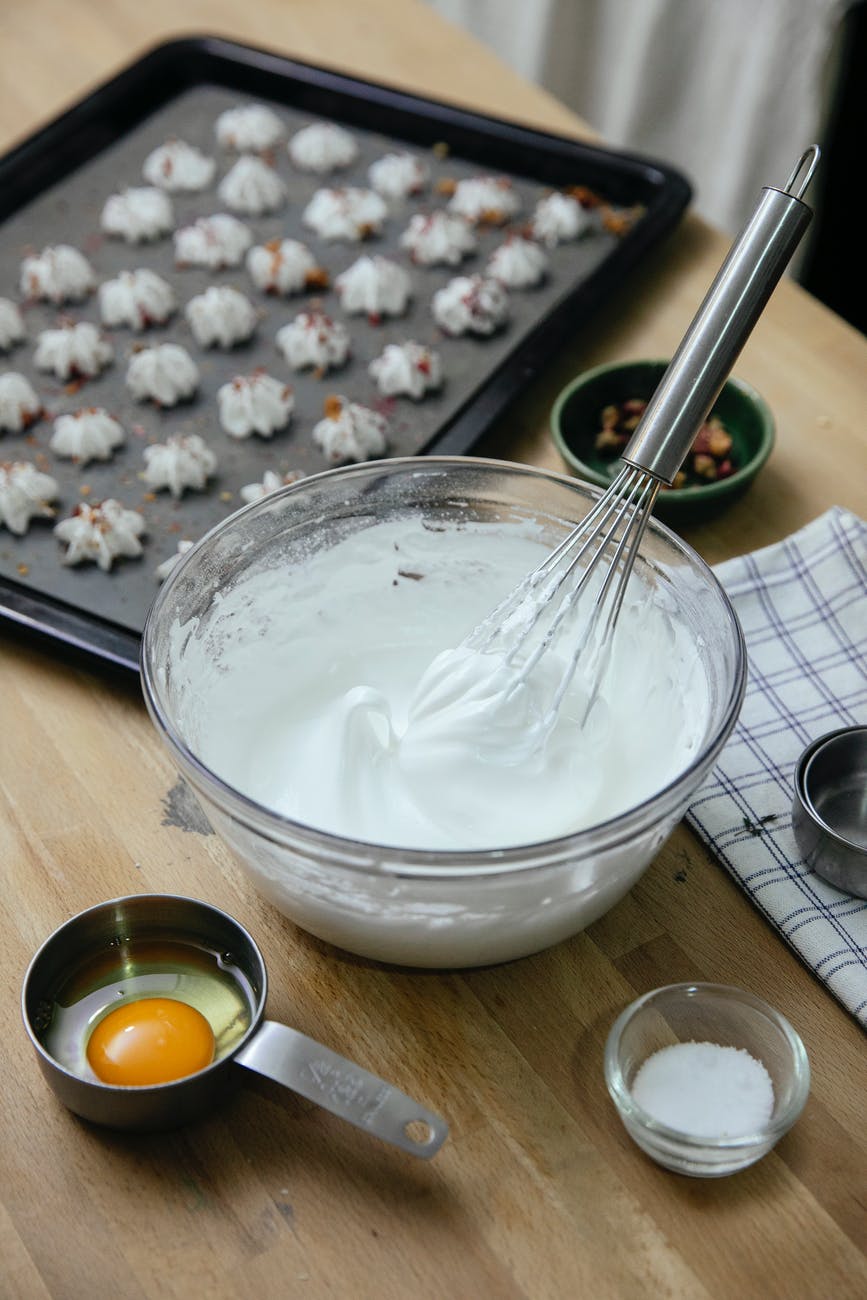
Eggs serve an essential role in many products. Certain properties of eggs such as colour, flavour, texture, binding, emulsifying, and foaming properties, are valuable in the preparation of many products. The egg-yolk contributes colour to such items as meringues and various cream pie fillings. The foaming of egg-whites is of importance in the development of a light structure and good volume in baked products.
Effect of cooking on Egg
When egg is heated, proteins undergo denaturation and then coagulation
factors affecting coagulation of egg proteins
Concentration and part of egg used
The concentration and the time required for coagulation depends on the proportion of egg in any mixture.
Stirring
Due to stirring, heat is distributed uniformly at the time of cooking and hence a smooth product is formed.
Temperature and time
The rate of coagulation increases with increasing temperature and time of cooking.
Effect of other ingredients
Dilution of egg with milk or water raises the coagulation temperature.
Foam Formation
- When egg is beaten, it produces foam by incorporating air into it.
- The foaming of egg plays an important role in many foods because it makes the product light in texture and contributes sponginess due to leavening action.
Stages of foam formation in egg white
- Foamy stage
- Soft peak stage
- Stiff peak stage
- Over beaten or dry foam stage
Functions of egg in cookery
Egg is useful in many food preparations. Egg can be used alone or in combination with other foods. The functional properties of eggs are as follows :
- Leavening agent (foaming)
- Coating agent
- Binding agent
- Thickening agent
- Emulsifying agent
- Clarifying agent
- Decorating agent
- Tenderizing agent
- Flavor and color
5 uses of eggs in baking — In baking there are five main functions of an egg. They bind, thicken, coat, serve as a leavening agent, and emulsify.
Thank You !
SUBSCRIBE US NOW ! for a weekly Free blogs
Email – foodtech101web@gmail.com
+91 91726 81949
+91 97641 19443
Contact Us
Follow US on…
Also Read – 10 benefits of eggs, poultry basics
 Food Tech 101
Very good, informative
LikeLike